

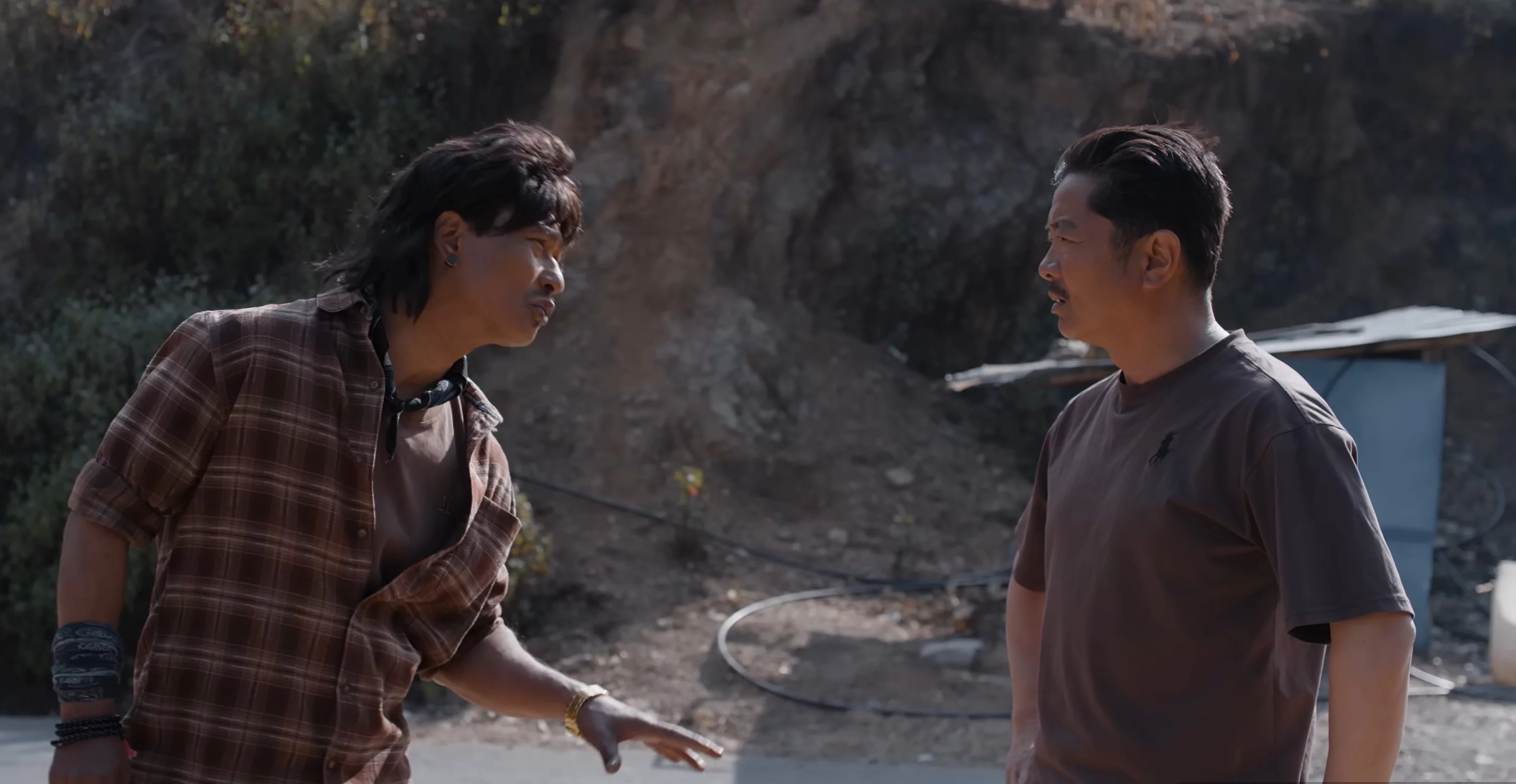
There's a funny paradox at the heart of Nepali cinema's most beloved duo. Dayahang Rai and Saugat Malla, in real life, are genuinely close, two theatre-trained veterans who came up together, understand each other's craft deeply, and share a mutual respect that's obvious the moment you see them talk off-camera.
Put them in front of a camera together, though, and something shifts. The warmth doesn't disappear, but it gets complicated. There's friction, there's tension, there's a glorious kind of stubbornness in both of them that makes you lean forward in your seat. And Nepali audiences, it turns out, absolutely love it.
Trained in the same fire
Both actors came from the theatre before film claimed them. That shared origin matters more than it might first appear. Theatre teaches actors to listen — really listen — to the person across from them, because there are no edits to save you. When two performers with that background are placed opposite each other, the scene crackles with genuine attention. Every line lands because someone on the other end is actually responding to it, not just waiting for their cue.
That's the invisible foundation beneath every argument, every cold shoulder, every sharp-tongued exchange these two have shared on screen. Their conflict feels real because their connection is real.
A track record built on tension
This dynamic didn't appear fully formed. It was built, film by film, clash by clash.
| Loot (2012) | Kabaddi series | Mitjyu (2026) |
| The heist comedy that proved these two could command a screen together and keep audiences laughing and nervous in equal measure. | Their dynamic deepened into something more layered; less slapstick, more genuine push-and-pull that felt earned rather than performed. | Their most ambitious pairing yet, as sworn mits whose bond is tested from within by love, loyalty, and a shared route on the road. |
Each film added a new layer to the audience's understanding of what these two can do together. By now, when people hear that Dayahang and Saugat are sharing the screen, there's an almost Pavlovian excitement, not just because they're individually talented, but because of what they become when they're in the same story.
The concept of "mit" makes it even more interesting
Mitjyu takes the friction to a more culturally charged place. The concept of "mit" in Nepali culture is a sacred bond, you don't even call your mit by their name once the relationship is formalized. It's a friendship elevated into a kind of family, with its own rituals and unspoken rules.
So when director Anil Budha Magar places these two not just as rivals but as mits who fall into conflict, he's doing something clever. He's setting up a tension that isn't just personal, it carries the weight of a cultural covenant being strained. Can you truly fight with someone whose bond with you is that deep? And if you do, what does it mean for who you are?
The film adds another ingredient: a young woman (played by Teria Magar) who enters their world, and a shared vehicle route that becomes the terrain of their dispute. It's a grounded, village-level story, the kind Nepali audiences recognize from their own lives; dressed up with the electric chemistry of its two leads.
The conflict between two heroes in the same film is rare. Most scripts have one hero and one rival. Mitajyu bets on something harder — two protagonists who are each other's obstacle.
Why we root for both of them
Perhaps the deepest reason audiences return to this pairing is that neither actor plays a villain in these stories. They're both, in their own way, right. Their conflicts aren't good-versus-evil; they're the messier, more honest clashes of two people who want incompatible things and can't fully let go of each other.
That's harder to write, harder to act, and infinitely more satisfying to watch. You leave the cinema not knowing quite who you sided with, and somehow that feels more true to life than most things you see on screen.
What Mitjyu needs to deliver
The film has a strong foundation. The rural Nepali setting, the cultural texture of the mit relationship, the proven chemistry of its leads, and a supporting cast that includes names like Khagbahadur Pun Magar, Shishir Wandel, and Anu Thapa, all of it points toward something special.
Produced by Janak Gharti Magar, with cinematography by Shishir Bishankhe and editing by Lokesh Bajracharya, the production team is clearly serious about honouring the material. The bet they're making is that Nepali audiences haven't tired of this combination — that there's still more road left between Dayahang and Saugat, more stories their friendship and rivalry can carry.
Given the history, it's a reasonable bet.


No comments yet. Be the first to comment!
Loading comments...